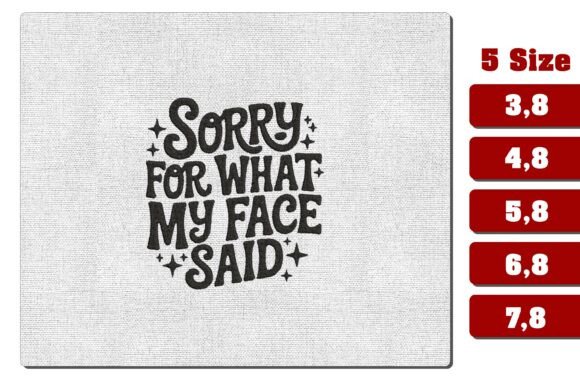
Sorry for What My Face Said Embroidery
A Professional Designer’s Take on a Bold and Humorous Design
As an experienced embroidery designer, I’ve had the chance to review countless machine embroidery designs for small business use. One that recently caught my eye is Sorry for What My Face Said Embroidery. This design immediately struck me as a perfect blend of humor and retro charm, making it ideal for businesses looking to inject personality into their merchandise.
First Impressions: A Playful and Memorable Design
The first thing that stands out about Sorry for What My Face Said Embroidery is its visual personality. It feels bold, friendly, and slightly mischievous—perfect for brands that want to connect with customers on a more personal level. The retro font style gives it a nostalgic edge, while the phrase itself adds a touch of self-aware humor that can resonate well with younger audiences and those who appreciate light-hearted branding.
This design doesn’t just look good; it feels like something you’d see on a vintage T-shirt or a hand-stitched patch. Its handmade aesthetic makes it a great fit for small businesses that value authenticity and craftsmanship. Whether used as a standalone piece or as part of a larger brand identity, this design has the potential to stand out in a crowded market.
Real-World Use Cases for Small Business Merchandise
Sorry for What My Face Said Embroidery is incredibly versatile when it comes to practical applications. Here are some of the ways it could be used effectively:
- Embroidered Patches: This design would work well as a patch for caps, aprons, or even custom branded items. Its playful tone makes it a hit for cafes, bakeries, and creative studios.
- Cap Embroidery: Adding this design to a cap front could give a local boutique or handmade shop a unique, memorable branding element.
- Tote Bag Design: As a subtle accent on tote bags, this design adds character without overpowering the overall look.
- Apron Embroidery: For kitchens or craft spaces, this design brings a fun twist to functional items.
- Product Packaging Accents: Using this design on labels or tags can help create a cohesive brand identity across all product touchpoints.
- Custom Apparel: From work shirts to event merch, this design offers a fresh and engaging option for custom apparel projects.
- Etsy Branding: Handmade brands can benefit from this design as a signature element in their product line.
- Branded Product Add-Ons: It can serve as a secondary design element on items like mugs, keychains, or phone cases.
Where to Be Cautious: Practical Considerations
While Sorry for What My Face Said Embroidery is a strong contender for many applications, there are a few areas where extra care should be taken:
- Small Patch Sizes: The design may not translate well to very small patches due to its detailed text and intricate lettering.
- Cap Fronts: While it works on caps, the curved surface might affect how the design looks in real life.
- Tiny Lettering: If the design includes fine details or small text, it may lose clarity at lower stitch densities.
- High Stitch Density: This design requires attention to stitch density to ensure it remains crisp and clear on fabric.
- Textured Fabric: On fabrics with texture, the design might appear less sharp or require additional stabilizer for best results.
- Dark Uniforms: Testing thread color contrast against dark backgrounds is essential to maintain visibility and impact.
- Frequent Washing: Items that undergo frequent washing may require higher-quality materials and proper stabilization to preserve the design.
Impact on Brand Identity and Customer Engagement
Using Sorry for What My Face Said Embroidery can have a significant impact on your brand’s identity and customer engagement. Its humorous and relatable nature helps build a connection with your audience, especially in industries like food service, retail, and creative arts. It adds a layer of personality that can differentiate your brand from competitors.
From a professional standpoint, this design contributes to a sense of authenticity and creativity. It supports the idea of a handmade product, which is increasingly valued by consumers today. When used consistently across various products, it reinforces brand recognition and trust.
Additionally, the design’s versatility allows it to be incorporated into both digital and physical assets, ensuring visual consistency across all brand touchpoints. Whether it's a printable mockup or a finished product, the design maintains its integrity and appeal.
Practical Tips for Embroidery Designers
If you’re considering using Sorry for What My Face Said Embroidery for commercial purposes, here are some practical tips to keep in mind:
- Test in Black and White First: Ensure the design works well in monochrome before finalizing colors.
- Check Patch Size Compatibility: Confirm that the design translates well to smaller formats like patches or cap fronts.
- Review Thread Color Contrast: Choose thread colors that provide maximum visibility against the fabric background.
- Inspect Spacing and Layout: Make sure the design fits within the hoop size and doesn’t cause overcrowding.
- Confirm Hoop Size: Ensure the design is compatible with standard embroidery hooping sizes.
- Use Proper Stabilizer: Especially on textured fabrics, a quality stabilizer will help maintain design integrity.
- Create a Mockup: Always generate a printable mockup for client approval before production.
- Compare with Other Assets: Ensure the design aligns with your existing brand assets for visual consistency.
- Confirm Commercial Licensing: Verify that the design is suitable for commercial use before placing an order.
Final Thoughts
Sorry for What My Face Said Embroidery is a valuable asset for any small business looking to add a touch of humor and personality to their merchandise. With its retro aesthetic and versatile applications, it’s well-suited for a wide range of uses, from embroidered patches to custom apparel. Just remember to test thoroughly, choose the right materials, and ensure compatibility with your brand’s overall vision.